

Explore your next steps
Your guide to piano lessons in St Albans
Make a comfortable start at home, find music you enjoy and build a practical routine between music lessons.
01
Find your starting point
Start with music you want to play
A favourite piano piece, song or film theme can give your lessons a clear direction. Tell me what attracts you to it: the melody, its rhythm or the feeling it creates. We can choose a short section or a suitable arrangement that matches your experience. The original recording does not have to be your first target. Learning a simpler version thoughtfully can develop useful skills while keeping the music that interests you at the centre of the work.
Start as a complete beginner
You do not need to know musical terminology or read a score before your first piano lesson. We can explore the pattern of black and white keys, find a comfortable position and play a short phrase. An explanation becomes more useful when you can connect it with a sound or movement. Rather than trying to remember everything at once, focus on one clear task that you can repeat and understand. Questions are welcome throughout the lesson.
Choose a musical instrument for home practice
As a mobile piano teacher, I normally teach using the piano or keyboard at your home in the St Albans area. Tell me what instrument you have before arranging a visit. If you do not have one, ask about possible alternative arrangements rather than buying in a hurry. When choosing an instrument, consider your available space, budget and opportunities to practise. We can discuss the features that matter for your current learning and future development, so the instrument supports your technical skills as they develop.
Explore your musical potential at any stage
Perhaps you had lessons as a child, learnt some songs independently or used to play more regularly. We can begin with something familiar and identify what feels comfortable now. Reading, rhythm and coordination may return at different speeds. A useful lesson builds on your existing strengths while choosing a manageable area to develop. There is no need to apologise for a break or prepare a complete performance before getting in touch about returning to the piano.
Choose a piano tutor or music school
Think about the setting that suits you as well as the instrument you want to learn. A music school may offer several subjects and ensemble activities; my individual piano lessons take place mainly at students’ homes in St Albans. Ask a prospective tutor how they choose material and explain a new idea. Students of different ages need different starting points. Your teacher should understand your interests, available practice time and the questions you want to explore. My teaching experience includes both private pupils and work in a local music school.
02
Build coordination, rhythm & piano confidence
Help your hands work together
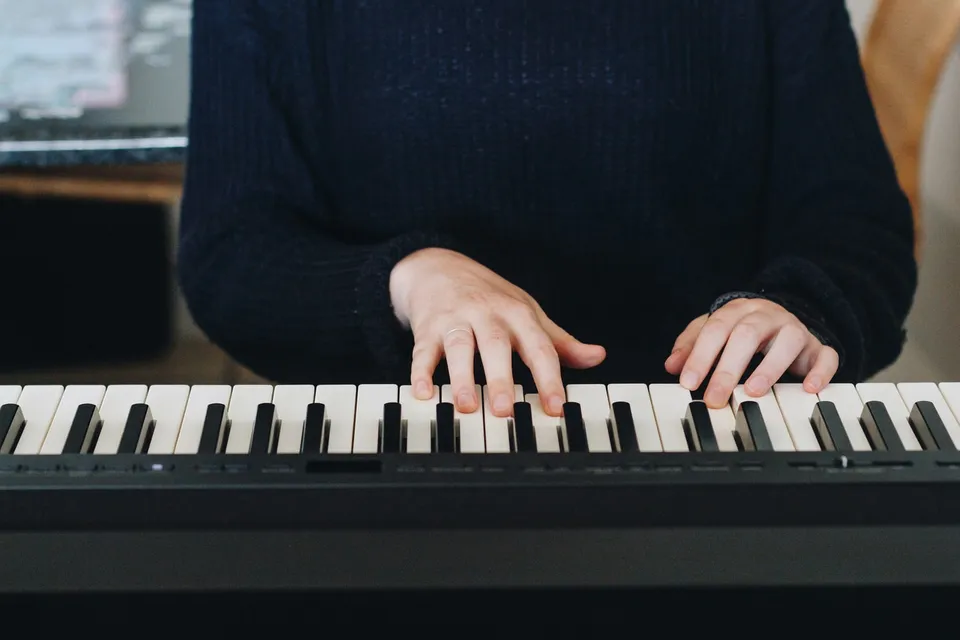
Playing with both hands can feel complicated when several new movements arrive at once. We can separate a short passage, understand each part and notice where the hands meet. Slowing down or simplifying an accompaniment can make the coordination easier to hear and feel. Once a movement becomes clearer, place it back into a musical phrase. The aim is to develop reliable connections between the parts, rather than rush through the piece with the same difficulty each time.
Develop a steady musical pulse
Rhythm gives a melody direction and helps an accompaniment support it. We can clap, count or play a short pattern before connecting it with the notes. If a change of position interrupts the flow, work slowly enough to notice what happens at that moment. A steady, comfortable pace often reveals more than trying to match a recording immediately. Listen to how the phrase moves, and make one purposeful adjustment before repeating it.
Understand music theory through playing
My teaching includes music theory, traditional notation, chord charts and learning by ear. We can choose the balance that supports your aims and connect each idea to practical music. A chord becomes easier to understand when you find its notes and listen to its effect; a rhythm becomes clearer when you play it in a phrase. Theory should help explain the music you are learning, with new concepts introduced in a way you can use. Ask your tutor to demonstrate an unfamiliar symbol in the piece itself. Music theory becomes more memorable when the explanation has a sound you can recognise.
Explore expression across musical genres
Classical, jazz and pop offer different ways to think about melody, accompaniment and character. We can discuss an arrangement that suits your playing and listen for the details that make it convincing. My background in piano accompaniment also informs my interest in how musical parts work together. Technique supports expression: a change in touch, timing or balance can help a phrase communicate an idea. There is room to enjoy the music while working carefully on its detail. Exploring a variety of styles can be an enjoyable part of your music education.
Listen beyond the piano part
Listening to other musicians can give your piano playing a clearer sense of shape. In a rock or pop recording, notice how the bass guitar supports the harmony while an acoustic guitar supplies a rhythmic pattern. In classical music, follow a violin or flute melody and listen for where the player breathes or changes direction. Try singing a short phrase before playing it. These are listening ideas, not additional instruments I teach. Use the recording to ask a practical question: should the melody be stronger, the accompaniment lighter or the rhythm steadier? Music theory helps connect these choices with what you hear.
03
Make practice useful between lessons
Take away a clear practice task
A useful task tells you what to notice, not simply which piece to repeat. You might work on a smoother change between chords, a particular rhythm or the balance between your hands. Make a note of the starting point and ask if any instruction feels unclear. A specific task gives your practice during the week a focus. At your next lesson, explain what improved and where you became stuck. This feedback helps us adapt the work to your experience rather than continuing with an exercise that is confusing.
Give difficult moments some space
If you repeatedly stop at one passage, try a short section around it rather than restarting the entire piece. Notice the notes, movement and rhythm at a pace you can manage. Once the section feels more secure, connect it with the surrounding phrase. Balance focused work with music you enjoy playing. Progress can mean a calmer movement or a more consistent pulse, even when you are not yet ready to play the whole piece from beginning to end.
Music lessons for children aged six and over
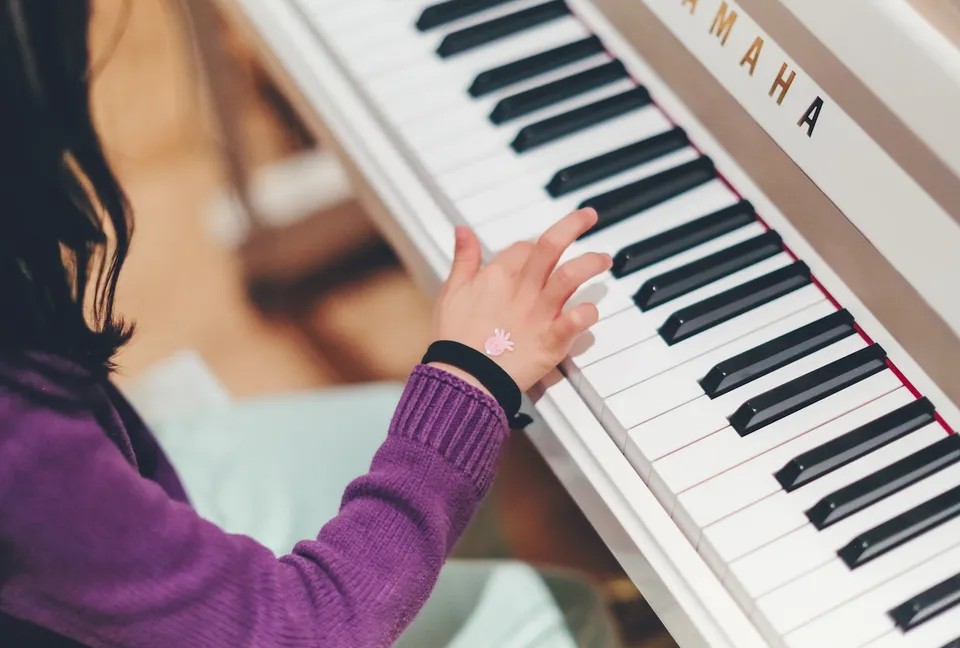
Lessons are available for children aged six and over. A comfortable instrument setup, a manageable task and a regular opportunity to revisit it can help a younger learner. Parents or carers can ask how best to offer encouragement without needing musical experience themselves. Notice which pieces interest your child and which instructions need another explanation. We can discuss an appropriate lesson length and adapt activities around their concentration, experience and developing confidence.
Piano exams or playing for pleasure
Piano tuition does not have to centre on examinations. You may prefer to develop a collection of pieces, improve your reading or simply enjoy making music. If you value the structure of grades, my experience includes preparing children and adults for ABRSM and Trinity–Guildhall examinations. Discuss the current syllabus, appropriate level and preparation plan before buying books or arranging an entry. Exam fees and other materials should be checked separately, and progress follows the learner rather than a promised deadline. Discuss with your tutor how the playing, listening and music theory requirements fit together. Preparing for exams should leave space to enjoy the pieces themselves.
Develop performance skills at your own pace
Sharing a short piece with someone you trust can help you feel confident about playing from beginning to end. Prepare the opening, decide how to finish and practise continuing after a small mistake. A private recording also lets students hear details they miss while concentrating on the keys. Compare two performances for one feature, such as a steadier pulse, rather than judging everything at once. Success might be a more expressive phrase or simply finding joy in playing a favourite tune. Exams are one option; making music for fun is a worthwhile aim in its own right. Your tutor can help you choose a comfortable piece and a realistic preparation plan.
Find inspiration in St Albans musicians
Students can learn from listening as well as practising. Our St Albans musicians page explores bands including The Zombies and Friendly Fires, with ideas for noticing melody, texture and accompaniment. Choose one detail that leaves you inspired and bring it to your teacher: a short pattern, a clear ending or the space around a tune. Listening to professional performances gives you examples to explore without expecting to reproduce them immediately. Bands divide musical roles between players; at the piano, simplifying those roles can be a useful way forward.
04
Arrange piano lessons in St Albans
Explain where lessons would take place
Include your area or postcode when you enquire, so I can confirm whether travel to your home is practical. Tell me about your piano or keyboard and any arrangements needed for the visit. A comfortable environment with room to sit and concentrate helps us make use of the lesson. Try to reduce interruptions and keep your music within reach. If you do not have an instrument, ask about possible alternatives first. Travel coverage, timing and any related arrangements should be agreed directly before an appointment is confirmed.
Choose a routine you can maintain
Individual lessons cost £25 for 30 minutes or £45 for an hour. Weekly appointments offer regular feedback, while fortnightly or another agreed pattern may fit your routine. Consider concentration, budget and practice opportunities when choosing a lesson length. Other durations need a separate discussion about availability and price. Read the prices and cancellation arrangements, then confirm payment and booking details directly. Sending a preferred time does not by itself confirm an appointment.
Ask about a piano lesson gift
Gift vouchers are available by arrangement. Before purchasing, check the recipient’s interest, location and access to a piano or keyboard. Confirm the voucher value, expiry and booking conditions so the gift is practical for the person receiving it. It may help to discuss a suitable first lesson length and their musical experience. A gift can introduce someone to piano or encourage a returning player, without needing to promise a particular level of achievement.
Share your aims with Sabrina
When you ask about piano lessons, include your musical interests, experience and usual availability. For a child, please include their age, and tell me about the instrument at home. You can read about my musical background and how lessons work before getting in touch. Send a message with your questions. We can discuss a realistic starting point and the practical arrangements, with lessons shaped around the music you want to explore.
Make space for music in everyday life
Adults may need to fit tuition around work, while younger pupils have school and other interests. Choose a short, repeatable practice window rather than an ambitious plan that leaves no free time. Keep the environment comfortable and your next task easy to find. Tell your piano teacher when an exercise stops making sense: understanding the purpose matters more than repeating it without attention. A sustainable routine gives your musical potential room to grow. You can explore local listening opportunities in the St Albans music venues guide and find practical equipment questions in the piano buying guide.